What Is an Artist Colony? History, Modern Equivalents, and How to Find One
An artist colony is a place where artists live and work side by side. Here's the history, whether they still exist, and how to find a modern one.
The short version
An artist colony is a place where a group of artists live and work near each other for a stretch of time, usually somewhere quiet and away from a city. The word comes from the late 1800s and early 1900s, when painters and writers gathered in villages and country estates to work cheaply and keep each other company. Most of those places still exist, but almost none of them call themselves colonies anymore. The model turned into what we now call residencies, retreats, and exchanges. So if you are looking for an artist colony today, you are really looking for one of those.
This guide covers where the idea came from, why the name faded, how a colony differs from a residency, and the practical ways to find a place to go make work now.
What an artist colony is
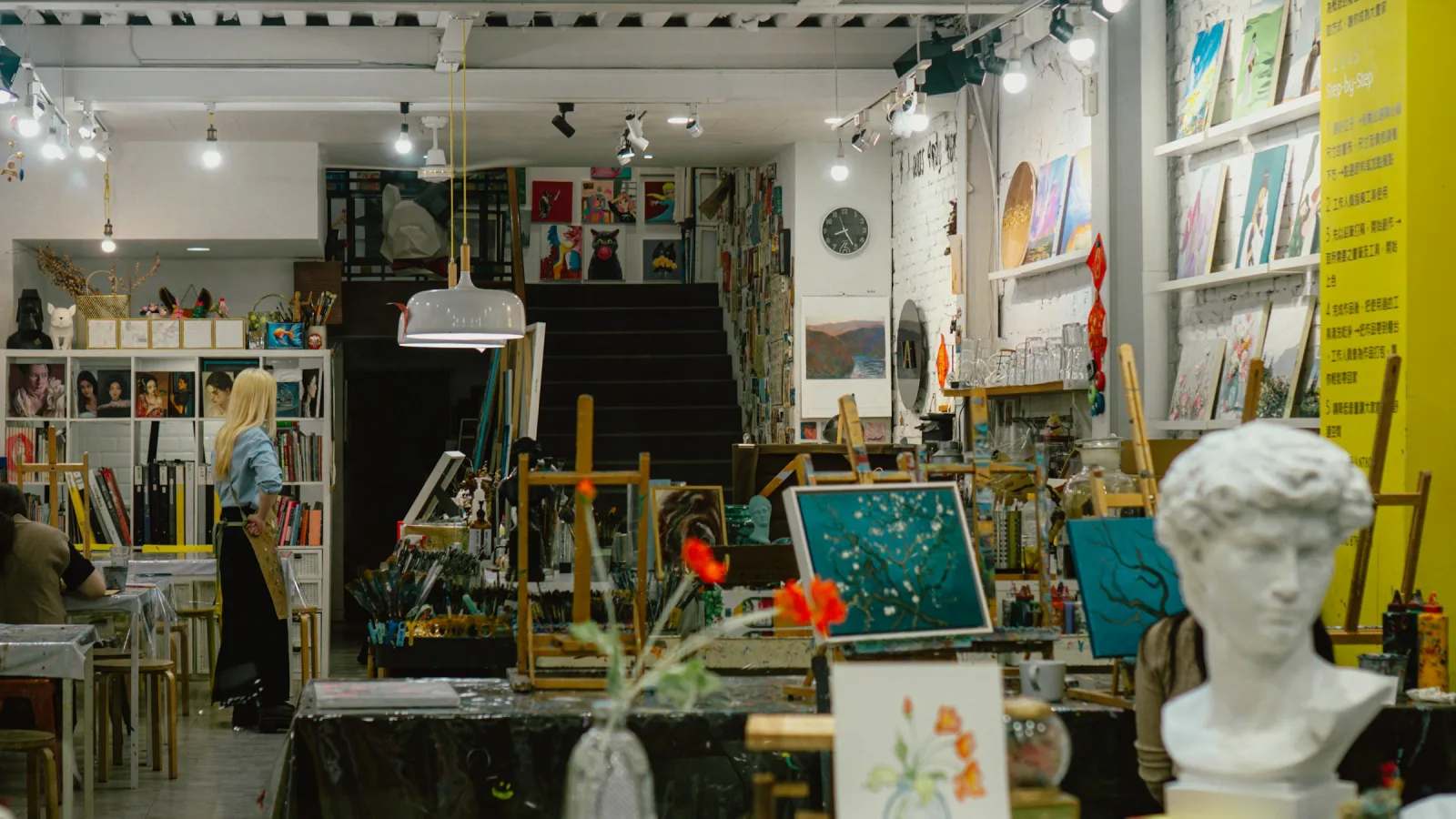
At its simplest, an artist colony is a community of artists working in the same place at the same time. The shared setting is the point. You get a room and somewhere to work, and you get other people around you who are also in the middle of something. Meals are often communal. Days are usually your own.
The word carries some romance, and that is part of why people still search for it. It suggests a barn studio, a shared dinner table, long walks, and the kind of uninterrupted time that is hard to find at home. That picture is not wrong. It is just that the places offering it have mostly changed their names.
You will see the term written three ways: artist colony, artists colony, and art colony. They all mean the same thing. Older colonies were often named after the town they grew up around, which is why places like Provincetown, Taos, and Cornish became shorthand for the whole idea.
A short history: MacDowell, Yaddo, and the colony era
The colony idea took hold in the United States in the early 1900s, though European painters had been gathering in rural villages for decades before that.
MacDowell, in Peterborough, New Hampshire, is the usual starting point. It was founded in 1907 by the pianist Marian MacDowell on the farm she had shared with her late husband, the composer Edward MacDowell. The plan was straightforward: give artists a studio, a place to sleep, and quiet, so they could work without the pressures of ordinary life. That formula has barely changed in over a century.
Yaddo followed a similar path. The estate in Saratoga Springs, New York, was left by Spencer and Katrina Trask to be used by artists, and it opened its doors to them in 1926. Composers, novelists, and painters have worked there ever since.
Alongside these organized programs, looser colonies grew up around specific towns. Provincetown on Cape Cod drew painters to its light and cheap lodging. Taos in New Mexico pulled in artists chasing the landscape. Cornish, New Hampshire, gathered a circle around the sculptor Augustus Saint-Gaudens. These were not always formal institutions. Often they were just places where enough artists settled that the town itself became the draw.
What linked all of them was a simple trade: cheap rent, natural surroundings, and the company of other people doing the same work.
Do artist colonies still exist?
Yes, though the word has mostly gone out of use.
MacDowell and Yaddo are both still running, and both still do what they always did. What changed is the language. Around the middle of the last century, most of these programs started calling themselves residencies instead of colonies. MacDowell itself dropped the word "colony" from its name in 2020, partly because of the word's uncomfortable associations with settlement and displacement. Newer programs almost never use it at all.
So the honest answer to "do artist colonies still exist?" is that the model is alive and well, but you will find it under different names. Search for artist residencies, retreats, or exchanges and you are looking at the direct descendants of the old colonies. The barn studio and the shared table are still out there. They just come with a different label.
The town-based colonies are a mixed story. Some, like Provincetown, still have active arts communities and programs you can apply to. Others faded as rents rose and the artists moved on. The pattern that built them, artists clustering where living is cheap and the setting is good, has not stopped. It just keeps moving to new places.
Artist colony vs. artist residency: what actually changed
If colonies became residencies, is there any real difference? Mostly it is a matter of emphasis.
A residency is a program that gives an artist time and space to work, usually for a fixed period, often after an application. The focus is on the individual artist and their project. Some residencies host one person at a time. Some host a dozen.
The old colony idea leaned harder on the group. The community was as much the offer as the studio. When people picture a colony, they picture the other artists at dinner, not just the empty studio in the morning.
In practice the two blur together. A residency that hosts several artists at once, feeds them communally, and sits in the countryside is a colony in everything but name. A one-person residency in a city apartment is not, whatever it calls itself. So the useful question is not "colony or residency?" but "how many other artists will be there, and how much will we share?" The answer tells you which experience you are actually signing up for.
For a full breakdown of how residencies work, what they cost, and how to apply, see our guide to artist residencies.
The modern equivalents: residencies, retreats, and exchanges
If you want the colony experience today, three kinds of place deliver it.
Residencies are the closest match. Programs that host several artists at once, especially in rural or small-town settings, recreate the old community feel. Many are free or funded. Most are competitive, with open calls and application deadlines. The trade-off for the low or zero cost is that you have to be selected.
Artist retreats** are shorter and usually more structured, sometimes built around a workshop, a teacher, or a theme. They tend to be fee-based rather than funded, which means less competition to get in but a real cost to attend. If you want a week of focused work with others, without an application cycle, a retreat often fits.
Exchanges are the newest version and the least formal. Here an artist stays with a host, a studio, a farm, a gallery, or a family with a spare room, and gives something back instead of paying rent. That might be a piece of work, a workshop, help around the space, or time spent with the host's community. This is the model Artaway is built around, and it is the closest thing to the original colony bargain: a place to stay and work, traded for creative presence rather than cash.
None of these is better than the others. They suit different budgets, timelines, and appetites for applications. Many artists move between all three over a career.
How to find an artist colony (or its modern equivalent) today
Here is the practical part. If you want to find a place to go and work alongside other artists, this is where to look.
Start with the directories. Res Artis and the Artist Communities Alliance are the two long-running networks that list residency programs worldwide. They are large, and they are not filtered for you, so expect to do some sorting. But almost every established program appears in one of them.
Follow open calls. Most funded programs run on deadlines. Sign up for the mailing lists of the programs you like, and check the directories' open-call listings so you are applying in the right window rather than discovering a deadline the day after it passed.
Look at the town, not just the program. If community is what you are after, favour programs that host several artists at once and that describe communal meals or shared studios. A program's own site usually tells you how many people are in residence at a time. That number shapes the whole experience more than the location does.
Consider the self-directed route. You do not have to wait to be selected. Studio exchanges let you arrange a stay directly with a host, which means no application cycle and no fixed calendar. You browse spaces, you reach out, you agree on the terms. It puts you in control of when and where you go.
You can browse spaces and exchanges on Artaway to see what that looks like in practice.
The self-directed path: art-for-accommodation exchanges
The competitive residency model has one real drawback: you can only go if someone picks you, and acceptance rates at the well-known programs are low. That leaves a lot of artists waiting on decisions instead of working.
An exchange skips the gatekeeping. Instead of applying to a program and hoping, you find a host with space, work out what you will offer in return, and go. The offer is usually creative rather than financial. A mural for a guesthouse. A short workshop for a community. A body of work made during the stay and shared with the host. The details are up to the two of you.
For an artist who travels, or wants to, this is the flexible version of the colony idea. You get the room, the studio time, and often the community that comes with staying somewhere real, without the application deadlines. If that way of working appeals to you, our guide to living and working as a traveling artist covers how people actually make it sustainable.
Artaway exists to make that kind of exchange easier to set up. It is early, and it is honest about what it is: a way for artists and hosts to find each other and agree on a stay. Not a colony, but a direct line to the same thing colonies were always really offering, which is somewhere to work and people to work near.
Frequently asked questions
What is an artist colony? An artist colony is a place where a group of artists live and work near each other for a period of time, usually in a quiet or rural setting. The shared community is a defining feature. The term dates from the late 1800s and early 1900s. Today most such places call themselves residencies or retreats instead.
Do artist colonies still exist? Yes, though almost none use the word anymore. Founding programs like MacDowell and Yaddo are still running, and the model, artists working together in a shared setting, is common. You will find it listed under residencies, retreats, and exchanges rather than colonies.
What is the difference between an artist colony and an artist residency? They overlap heavily. A residency gives an individual artist time and space to work, often after an application. A colony emphasises the group and the shared community around that work. A residency that hosts several artists together in a rural setting is, in practice, a colony under a newer name.
How do you join an artist colony? Three main ways. Apply to a residency program through an open call, usually via directories like Res Artis or the Artist Communities Alliance. Book a fee-based retreat, which skips the application. Or arrange a self-directed exchange, where you stay with a host and give something creative in return instead of paying rent.
Are artist colonies free? It depends on the model. Funded residencies can be free or even pay a stipend, but they are competitive. Retreats usually charge a fee. Exchanges are free of cash cost because you trade creative work or presence for the stay. There is no single answer, so check each program's terms before you commit.
Related guides
- Writing Residencies: How They Work and How to Apply
- Illustrator Residency Programs: A Practical Guide (2026)
- Virtual Artist Residencies: How They Work, What They Cost, and Whether They're Worth It
- What Is a Music Residency? Programs, Funding and Applications
- Ceramics Residency Programs: How They Work and How to Apply
- Fiber Arts and Textile Residencies: How They Work and What They Cost
- Paid artist residencies: how the money actually works
- Free artist residencies: what "free" actually covers
Ready to get started?
Browse self-funded, funded, and exchange artist residencies on Artaway.
Explore opportunities