Fiber Arts and Textile Residencies: How They Work and What They Cost
Fiber arts residencies run from free three-week stays to short paid studio blocks. What the formats mean, what they cost, and how to find one.
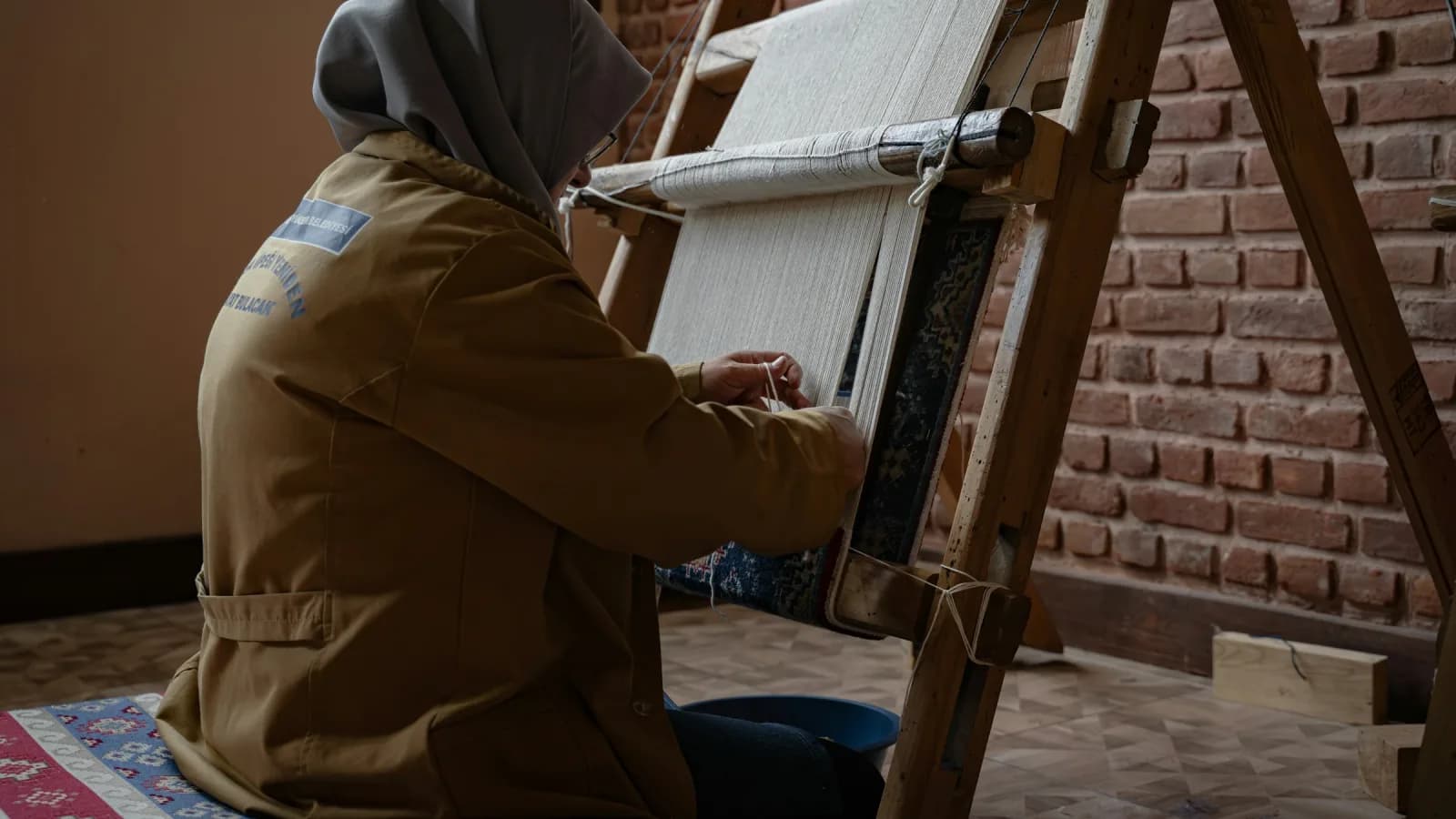
What a fiber arts residency actually is
A fiber arts residency is time and space set aside for textile work, usually somewhere that isn't your own home. That is the whole of what the phrase reliably means. Everything past it varies so much that two artists comparing notes can be describing unrelated experiences. One stayed three weeks, paid nothing, and had lodging covered. The other paid $300 for five days of studio access and sorted out their own bed.
Worth knowing before you start applying, because the word hides more than it explains. If you're new to the format in general, what an artist residency is covers the basics and the full residency guide covers the range of what's out there. Fiber has two complications of its own: the equipment problem, and the fact that a lot of these programs sit on working farms rather than in art centers.
Three formats sharing one word
Look at three real programs listed in mid-2026 and the spread becomes obvious.
Creekside Arts ran a fiber artist residency advertised through Res Artis in January 2026: three weeks, free for all participants, lodging and studio workspace covered, with a $25 application fee. That's the funded model. You apply, you compete, and if you get in the program absorbs the cost of you being there.
Peters Valley School of Craft listed a Fibers and Textiles Artist Residency for 26 to 30 June 2026 at $300, in a studio set up for sewing, dyeing and weaving. Nothing hidden about that, but it's a different product. Five days, a fee, a well-equipped room. Closer to renting a very good workshop for a week than to a funded stay.
Thread Caravan runs TEXERE in Santa María del Tule, Oaxaca, taking applications year-round on a rolling basis for stays of one to four weeks. Its published rates are tiered by nationality: no fee for Indigenous artists, 7,500 MXN for Mexican citizens and diaspora, 10,000 MXN for citizens of Latin America, Asia, Africa and the Caribbean, and 15,000 MXN for citizens of the US, Canada, Australia, New Zealand and Europe. Accommodation and use of textile equipment are included. No selection committee in the usual sense, a published price, and a rolling door. Call it the independent model.
None of those is more legitimate than the others. But an artist who applies to all three thinking they're the same thing is going to be surprised twice. When you find a program, the first question is which of these it is, and the listing often won't say plainly. Vetting a residency before you apply goes into what else to check.
The self-directed version sits slightly outside all three. A host with a rural studio and a spare room can be a workable textile retreat without any application cycle, which is the arrangement Artaway is built around. It suits some practices and not others, and how an exchange differs from a residency is the honest comparison.
What it costs
This is the question people keep asking and almost nobody answers. Search for what a fiber residency costs and you'll land on one program's page quoting one number, which tells you nothing about the range.
Going by what programs published in mid-2026, that range looks like this. Free, with lodging and studio included, at the funded end. Around $300 for a short studio block at a craft school. Roughly $375 to $750 for a multi-week independent residency with accommodation, depending on where you hold a passport. Application fees, where they exist, tend to be small, in the $25 region, but you pay them whether or not you get in.
Three things catch people out. Travel is almost never included, and for a fiber artist it's a bigger line than usual because materials are heavy and bulky. Materials themselves are usually yours, dyestuffs included. And a stipend is rare in this discipline compared to, say, writing residencies, so budget as though there's no income attached unless the listing explicitly promises one.
If money is the blocker, artist travel grants covers the funding routes and creative travel on a budget covers the rest. Prices move, so treat every figure here as a snapshot rather than a rule.
The equipment question decides everything
Fiber is more equipment-dependent than most disciplines, and more unevenly so. A residency without a floor loom is useless to a tapestry weaver and completely fine for someone doing hand embroidery. Generic residency advice is unusually unhelpful here for exactly that reason.
Work out what you cannot travel with, then check for it specifically. Looms are the obvious one, and "we have a loom" tells you almost nothing. Floor, table, rigid heddle and countermarch are different machines with different capabilities, and a loom already warped for someone else's project is not available to you. Dye work needs more than a pot. It needs a wet studio, a heat source, water access, ventilation, and somewhere that won't mind stains. Tufting needs a frame and a tolerance for noise. Sewing needs machines that are maintained, not machines that exist.
ACRE Residency's fibers program describes residents working with weaving, sewing, dyeing and tufting, which is a wide setup. Peters Valley lists sewing, dyeing and weaving. Most programs are narrower than either, and the gap between what a listing implies and what's actually in the room is where residencies go wrong. Ask for photographs of the studio. Ask what condition things are in. Ask what's already spoken for.
Ceramics artists deal with a near-identical version of this problem, and the ceramics residency guide is worth reading alongside this one if you want to see how the same equipment logic plays out in another material.
Where to find them
The listings are scattered, which is why looking for one so often ends at a directory rather than an answer.
The Textile Society of America keeps an artist residency page collecting current open calls, and it's the most discipline-specific board in regular use. Res Artis carries fiber and textile calls among its general residency listings. Past those two, a lot of what exists surfaces only through the programs' own sites.
Geographically, a few places come up again and again. Europe generally, with Iceland appearing far more often than its size would suggest, largely on the strength of the textile center at Blönduós. Japan shows up steadily, tied to its dye and weaving traditions. Mexico, and Oaxaca in particular, has a dense weaving culture and several programs built around it. In the US, an unusual share of fiber residencies run on working farms: A Wrinkle In Thyme Farm describes a farm, flock and fiber program, and Gael Roots Community Farm ran a fiber arts residency with Catskill Art Space dated 20 to 27 September 2026. If the fleece-to-yarn end of the practice interests you, that farm strand is worth searching for directly.
You can also browse spaces on Artaway and approach hosts yourself, which is a different route with different tradeoffs. How the exchange works explains the mechanics.
Does your practice count?
Almost certainly yes, and the uncertainty is understandable given how programs word things.
"Fiber arts" and "textile arts" get used more or less interchangeably, and both are broad. Weaving, spinning, dyeing, felting, quilting, embroidery, tufting, surface design, basketry and knitting all sit inside the category as programs normally use it. Some listings say fibers, some say textiles, some say craft, and the practical difference is usually nothing.
Where it does matter is equipment, again. A quilter and a weaver both count as fiber artists and need almost nothing in common from a studio. So rather than asking whether your practice qualifies, ask whether the specific room works for the specific thing you plan to make there. That's the question that actually rules programs out.
Applying with textile work
Textile portfolios have a problem painting portfolios don't. Photographs flatten them. Scale disappears, surface disappears, and drape disappears entirely.
Work against that. Put something in at least one image that gives scale, a hand or a rule. Photograph surface close enough that structure reads. If a piece moves or hangs, show it doing that. Panels reviewing textile work tend to look for evidence of process as much as finished pieces, so samples, dye records and in-progress shots usually help rather than pad.
Then say what you'll make there and why it needs that place. "I want time to weave" is weaker than "I want to weave a series using fleece from the farm's own flock, which is why this program and not another one." Programs on farms and programs attached to craft traditions both respond to specificity about the material relationship.
Making your profile stand out covers presentation more generally.
Frequently asked questions
Are fiber arts residencies free? Some are and most aren't. The funded end covers lodging and studio and charges nothing beyond a small application fee, as Creekside Arts did for its three-week 2026 residency. The paid end runs from around $300 for a few days of studio access to roughly $750 for several weeks with accommodation. Read the listing carefully, because both get advertised with the same word.
How long does a fiber arts residency last? Anywhere from five days to several weeks. Short craft-school blocks tend to run under a week. Independent programs commonly offer one to four weeks. Funded residencies are often around three weeks. Longer stays exist but are less common in this discipline.
Do I need my own equipment? Usually you bring materials and the program provides the large equipment, but check exactly what's there before you commit. Looms vary enormously, and a loom warped for another project isn't usable. Dye work needs a wet studio with ventilation and water, which many otherwise good studios don't have.
Is there a difference between a fiber arts residency and a textile residency? Not meaningfully. Programs use the terms interchangeably, along with "fibers" and sometimes "craft". Search both, because listings are inconsistent and you'll miss things if you only use one.
Can I do a residency if I knit or quilt rather than weave? Yes. Fiber arts as programs use it covers knitting, quilting, embroidery, felting, basketry and more. The real question isn't whether your practice counts but whether that particular studio has what your practice needs.
Do fiber arts residencies pay a stipend? Rarely. Stipends are less common in this discipline than in writing or some visual arts programs. Assume no income unless the listing states one explicitly, and budget travel and materials on top of any fee.
Related guides
- Writing Residencies: How They Work and How to Apply
- Illustrator Residency Programs: A Practical Guide (2026)
- What Is an Artist Colony? History, Modern Equivalents, and How to Find One
- Virtual Artist Residencies: How They Work, What They Cost, and Whether They're Worth It
- Music Residency Programs: How They Work and How to Apply
- Ceramics Residency Programs: How They Work and How to Apply
- Paid artist residencies: how the money actually works
- Free artist residencies: what "free" actually covers
Ready to get started?
Browse self-funded, funded, and exchange artist residencies on Artaway.
Explore opportunities